Listed isn't the same as sold.
Price your home from the data. Know your net before you sign.
Most homes get priced off a gut feeling and an online estimate. Then they sit. You get a written home valuation report instead: what recent sales support, what you're up against, and what you take home at each price.
Why some listings sit.
Three things kill a listing: the wrong price, the wrong photos, and a plan that ends the day the sign goes in the yard.
The usual listing
- Sign in the yard, MLS entry, wait for offers
- Reaches only the buyers already on Zillow this week
- Drop the price when offers don't come
The way I work
- Multi-channel marketing, not just the MLS
- Reaches buyers who aren't searching yet
- Price by the market, not by guess
Five decisions. A written report for each.
Selling comes down to a handful of big calls. You make each one with the numbers in front of you, and I put them in writing so you can check every one.
Step 1: Price
Price from real sales, not a guess.
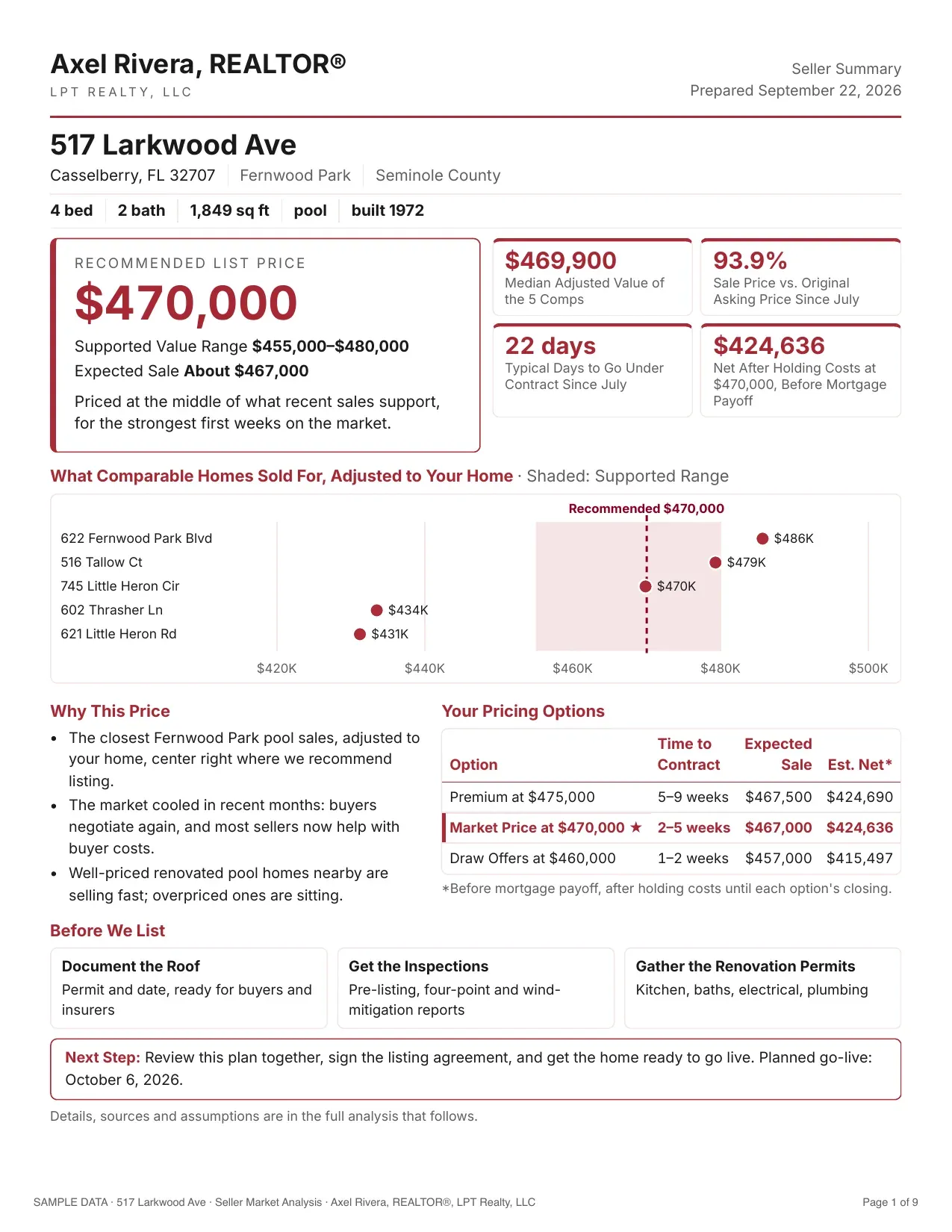
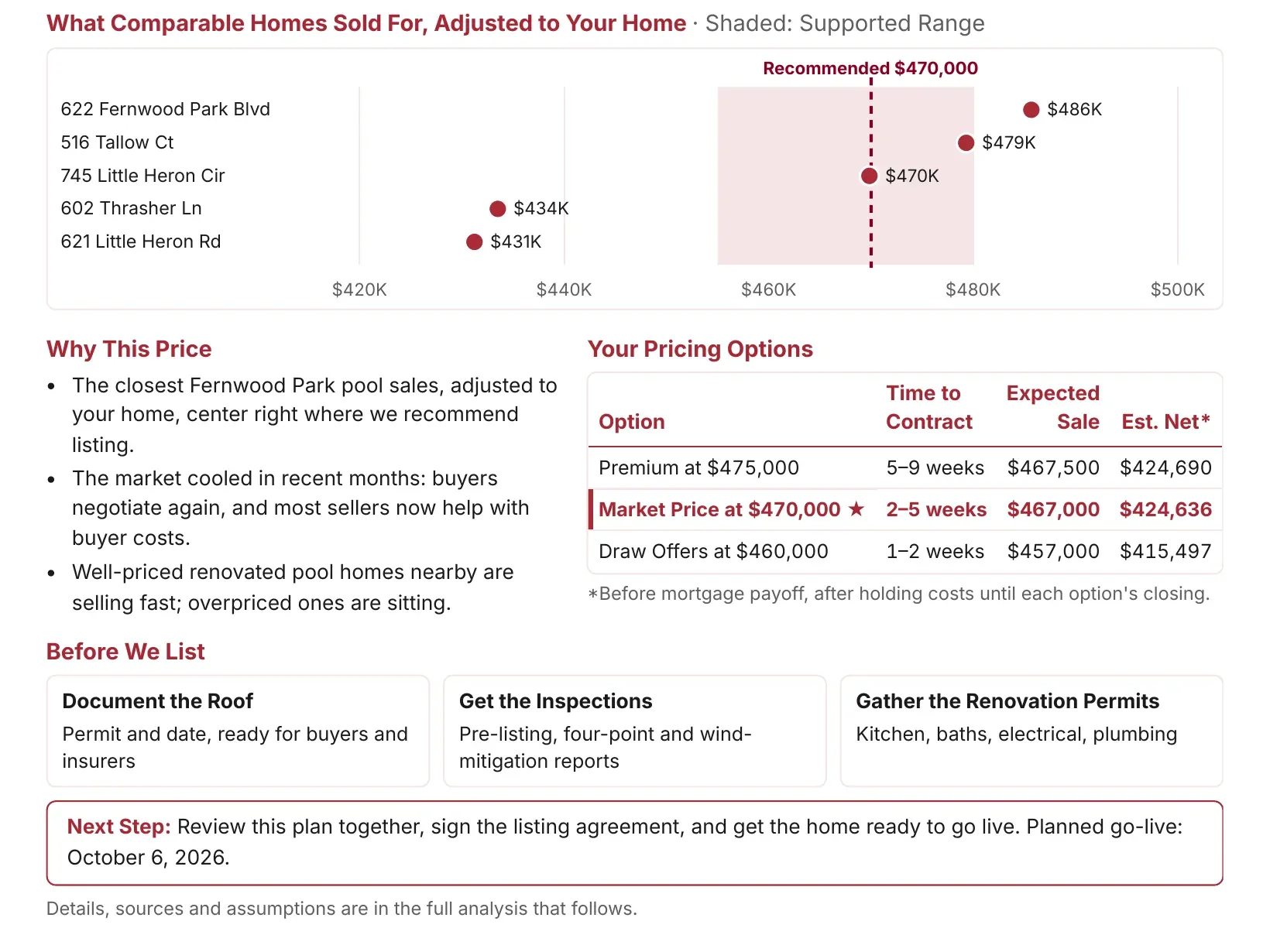
Open the Sample Home Valuation Report(PDF, 9 pages)I pull the recent sales closest to your home and adjust each one for the differences: size, pool, condition, roof, the month it sold.
You get a recommended price, the range those sales support, and three ways to list. Each one shows how long it should take to go under contract and what you'd net.
Step 2: Timing
List when buyers are actually signing.
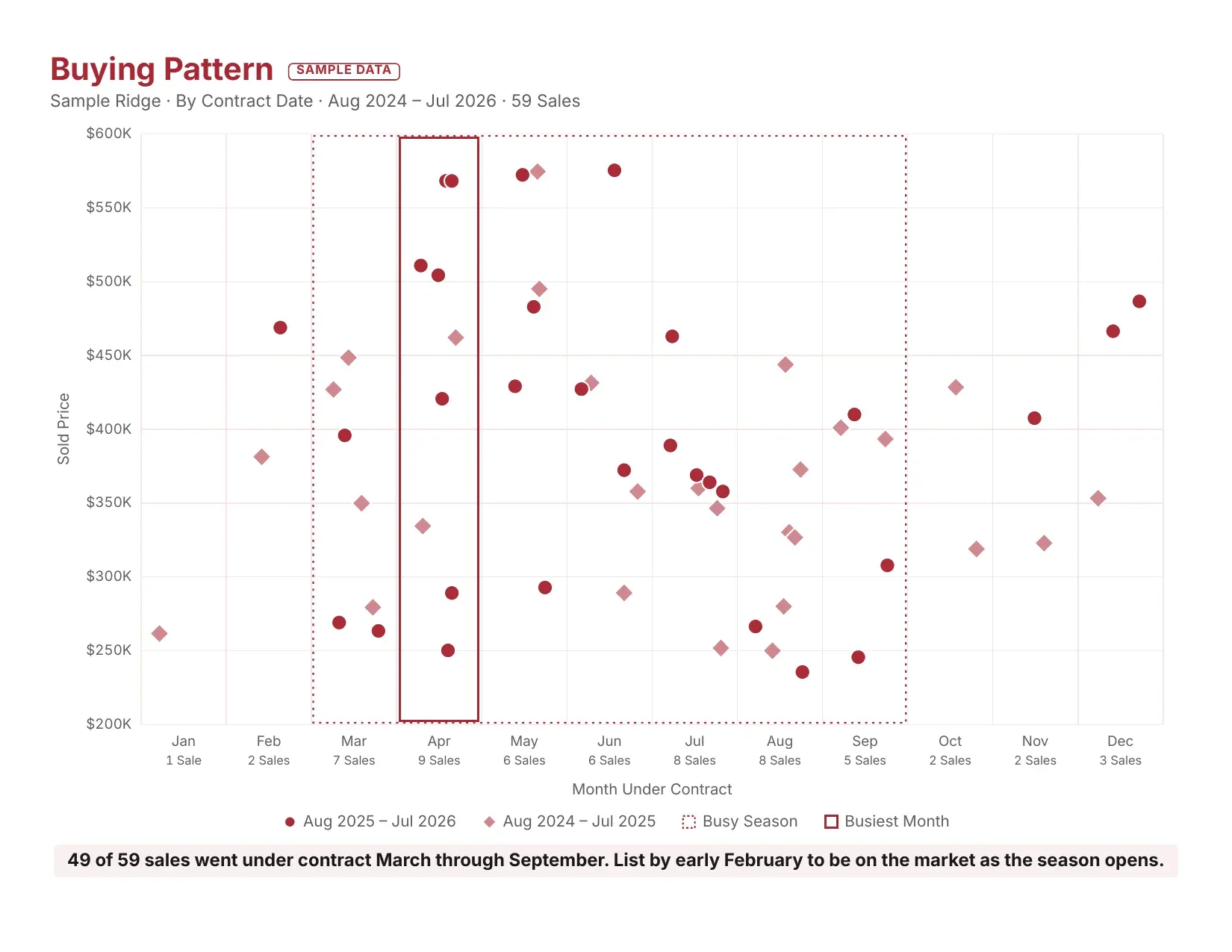
Open the Sample Buying Pattern(PDF, 1 page)Every neighborhood has a season. I chart two years of closed sales by the month they went under contract.
You see the busy months, the slow ones, and when to list so you're on the market as the season opens.
Step 3: Net
Know your take-home before you sign.
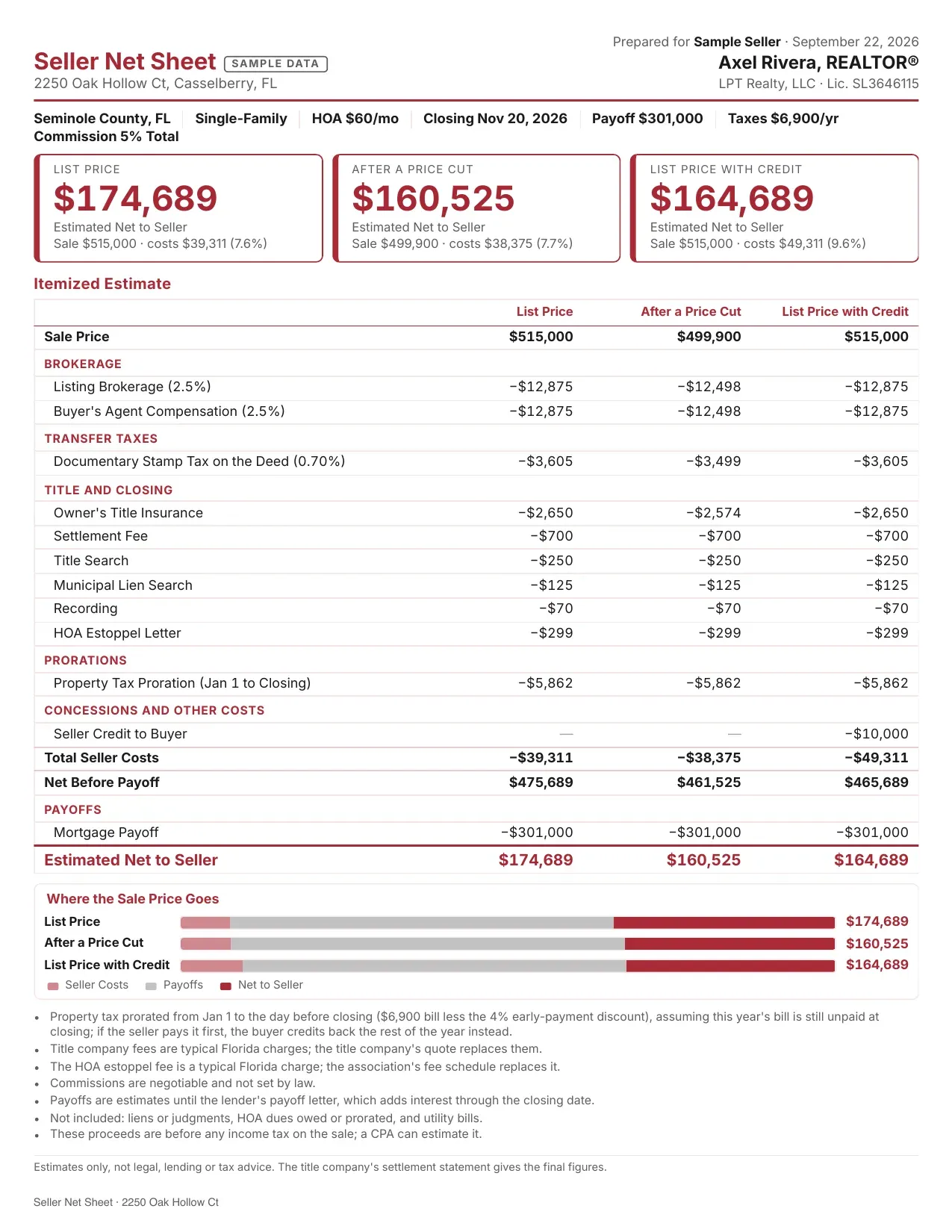
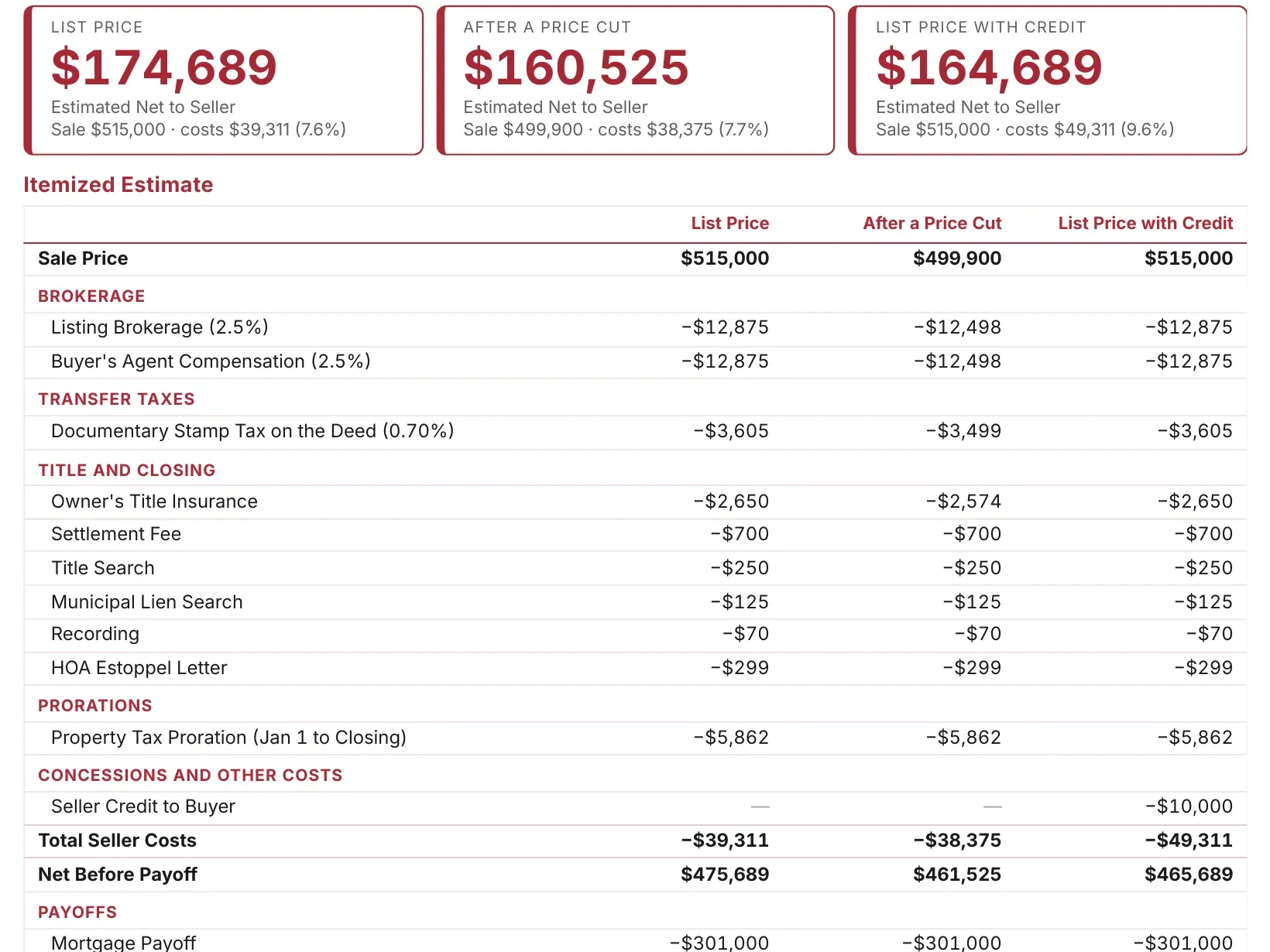
Open the Sample Seller Net Sheet(PDF, 1 page)The sale price isn't your number. Your net is.
The net sheet itemizes every cost down to the cash you take home at closing: brokerage fees, doc stamps, title, prorations and your payoff. At up to three prices, side by side.
Step 4: Offers
The highest offer isn't always the best one.
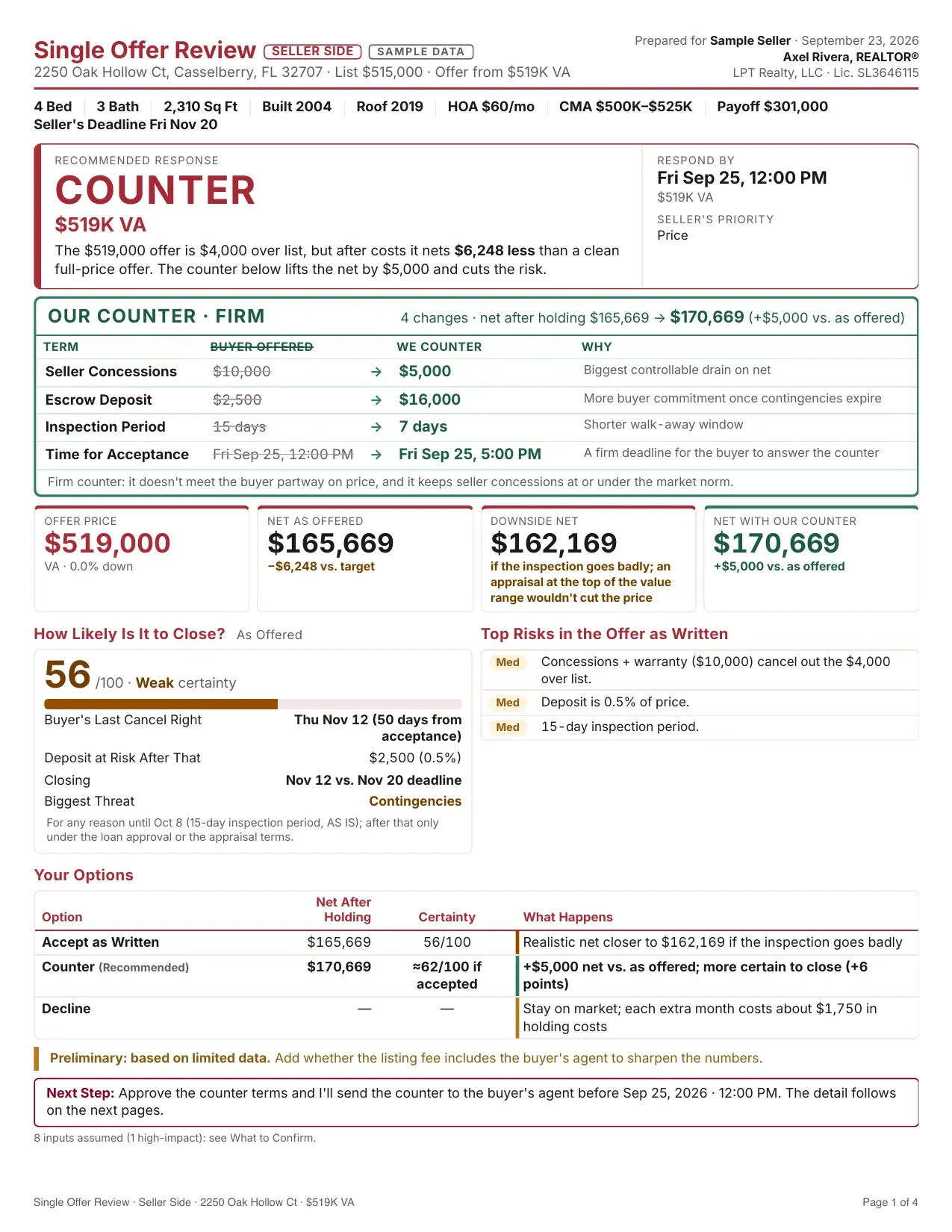
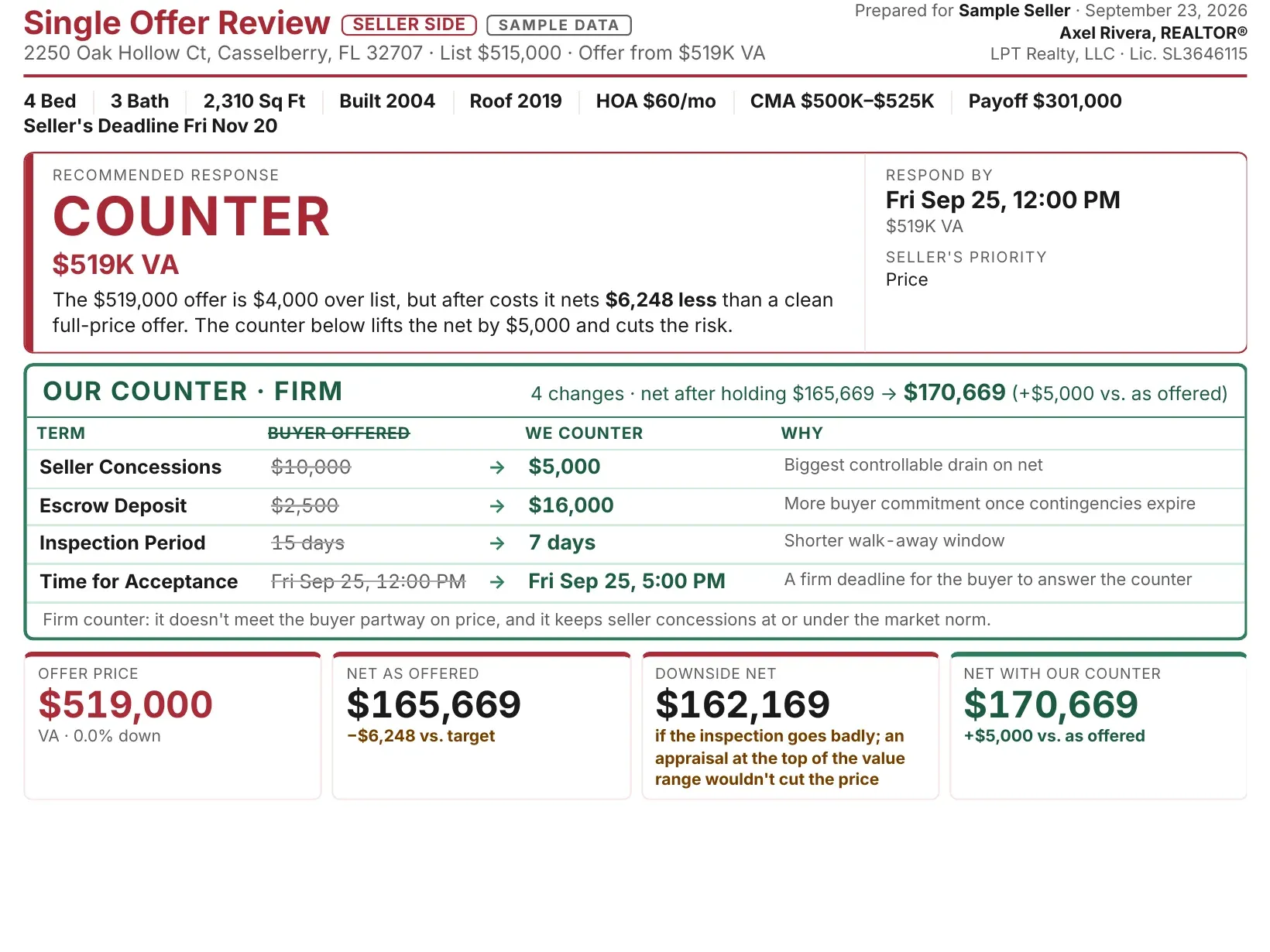
Open the Sample Offer Review(PDF, 4 pages)I score every offer on two things: what you net, and how likely it is to close.
You see your net as offered and if the appraisal or inspection goes badly, the risks in the terms, and the counter I recommend. With several offers, they're ranked.
Step 5: Contract
Every deadline, in writing.
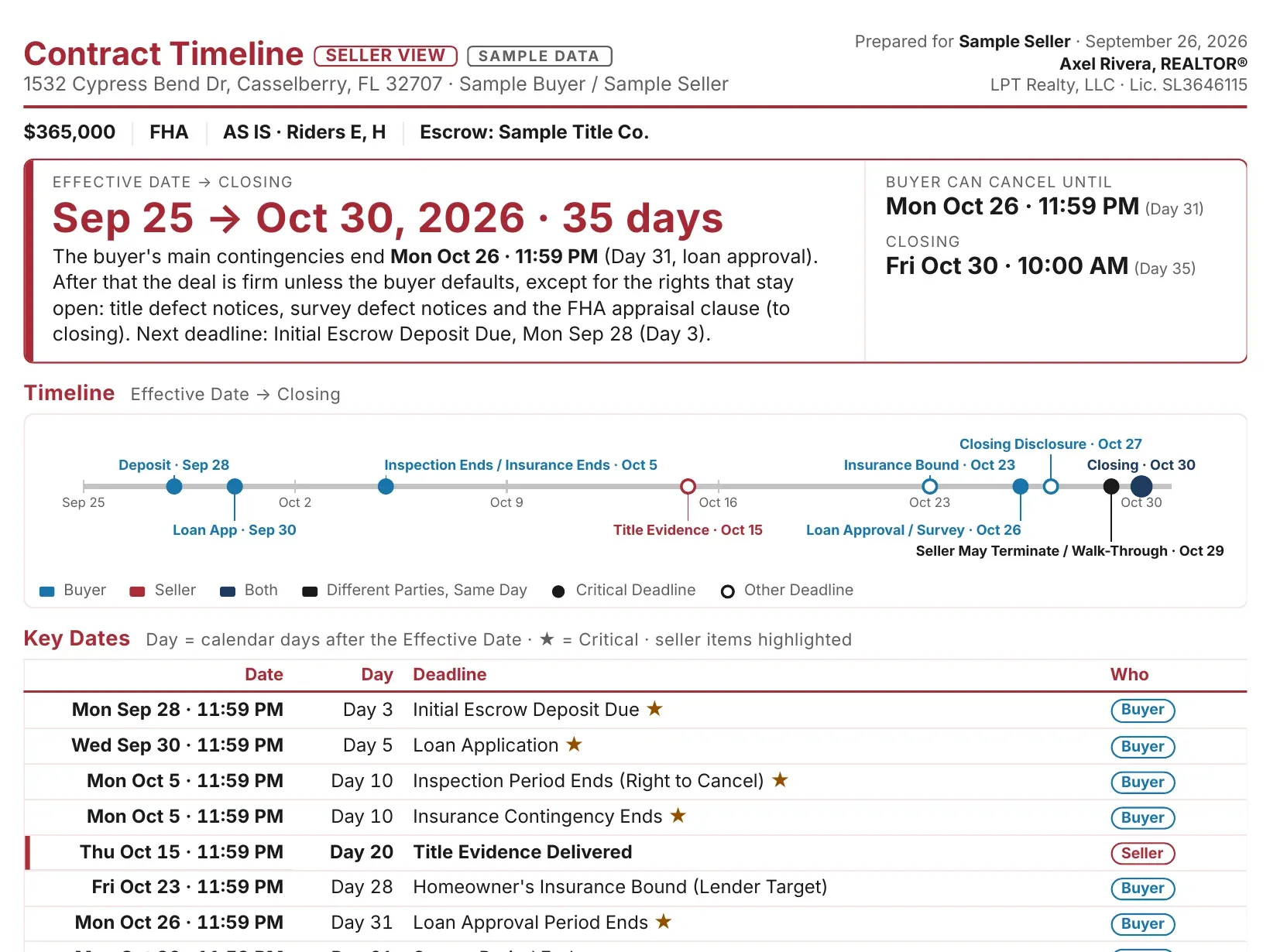
Open the Sample Contract Timeline(PDF, 3 pages)Once you're under contract, the dates matter: inspection, appraisal, loan approval, closing.
You get every deadline, who owes it, and what happens if someone misses it. Plus a calendar file that puts the dates on your phone.
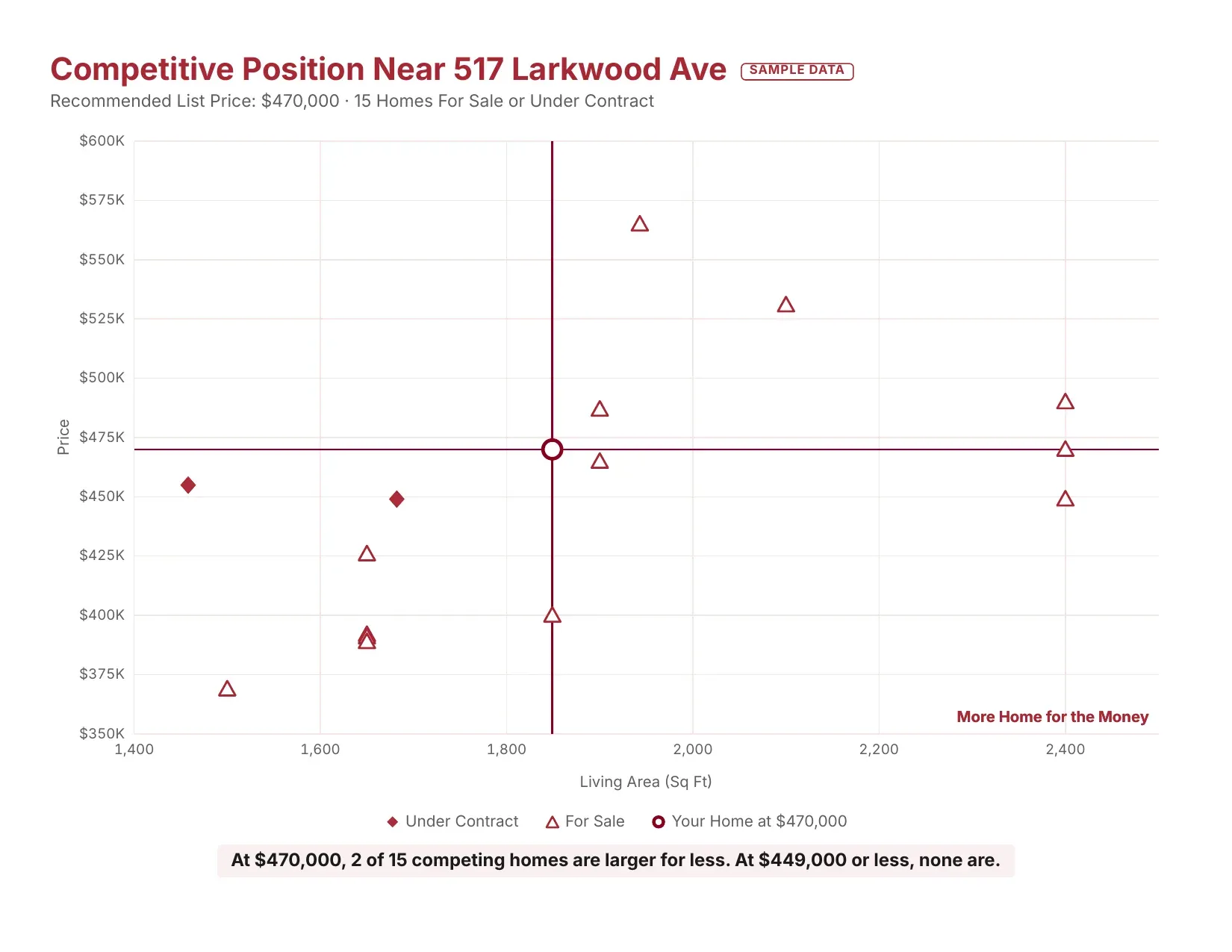
Buyers compare your home to what's for sale, not to an estimate.
So I chart every home for sale or under contract near your size, with yours at the recommended price. One look shows whether buyers can get more home for less down the street.
2 of 15
competing homes are larger for less at $470,000. At $449,000, none are.
From the sample competitive position chart.
Then I get your home in front of buyers.
The right price gets buyers to say yes. The marketing gets them to see your home in the first place.
Geotargeted Reach
Direct mail, door hangers, and digital ads aimed at the neighborhoods most likely to produce your buyer. Not the whole region. The right blocks.
Multi-Channel Exposure
MLS is the floor, not the ceiling. Social ads, neighborhood canvass, digital flyers, and the LPT agent network all working the same listing at once.
Demand, Not Hope
One interested buyer is a negotiation. Several is a competitive offer situation. The plan is built to create the second case, not the first.
Why LPT Realty
The brokerage you choose changes what your listing has access to.
LPT Realty is a tech-forward national brokerage with thousands of agents across multiple states. For sellers, that translates into three concrete advantages.
A Nationwide Buyer Pipeline
Buyers relocating from out of state often find your home through an LPT agent in their current city before they ever see a listing portal. The bigger the network, the wider that funnel gets.
Modern Marketing Infrastructure
Listing syndication, branded landing pages, and digital ad tooling are built into the LPT platform. The marketing tools come with the listing, not as a separate upsell.
A Brand That Travels
LPT signs and listings show up in markets across the country. Out-of-state buyers may already recognize the brand from their current city, which shapes how they engage with your listing.
Request a home valuation.
Send your details and I'll follow up personally to go over what your home is worth and what you'd net. No cost, and no obligation to list.
Thanks! I got your message.
I'll reach out soon. If you prefer, you can reach me directly at (407) 227-3205.
Sending your message...
Prefer to talk directly?
Call me at (407) 227-3205